Ashwagandha KSM-66 vs Sensoril: Which Extract Actually Works? (2026)
Ashwagandha is the most studied adaptogen in the world — over 200 clinical trials. But not all ashwagandha is created equal. The extract type, withanolide concentration, and extraction method make the difference between a supplement that transforms your stress response and one that does absolutely nothing.
The two dominant patented extracts are KSM-66 and Sensoril. They look similar on the label but work very differently. We dug into the clinical data and give you our honest verdict.
What Is Ashwagandha?
Ashwagandha (Withania somnifera) is an adaptogenic herb used for over 3,000 years in Ayurvedic medicine. Modern research confirms it modulates cortisol, supports GABA pathways, improves thyroid function and enhances physical performance.
The active compounds are withanolides — steroidal lactones that interact with the HPA axis. Higher withanolide concentration = stronger clinical effects. This is where KSM-66 and Sensoril diverge dramatically.
KSM-66: The Full-Spectrum Root Extract
Manufacturer: Ixoreal Biomed (India) · Source: Root only · Withanolides: ≥5%
Clinical trials: 24+ published RCTs
- Most clinically studied ashwagandha extract in the world
- Root-only extraction (traditional Ayurvedic method)
- Non-sedating — can be taken morning or evening
- Improves testosterone (+15-17%), muscle strength and VO2 max
- Reduces cortisol by 23–30% in clinical trials
- Lower withanolide % than Sensoril (5% vs 10%)
- Effects are more gradual (2–4 weeks for full benefit)
Sensoril: The High-Potency Leaf + Root Extract
Manufacturer: Natreon Inc. (USA/India) · Source: Leaves + roots · Withanolides: ≥10%
Clinical trials: 8+ published studies
- Double the withanolide concentration (10% vs 5%)
- More sedating — better for evening use and sleep support
- Faster onset of calming effects (some report same-day)
- Lower effective dose needed (125–250mg vs 300–600mg)
- Includes leaf extract (less traditional)
- Fewer clinical trials than KSM-66
- Can cause drowsiness — not ideal for daytime use
Head-to-Head Comparison
| Criteria | KSM-66 | Sensoril | Winner |
|---|---|---|---|
| Withanolide % | ≥5% | ≥10% | Sensoril |
| Clinical trials | 24+ RCTs | 8+ studies | KSM-66 |
| Source | Root only | Leaves + root | KSM-66 |
| Daytime use | Non-sedating ✅ | Can cause drowsiness | KSM-66 |
| Sleep support | Moderate | Strong sedative effect | Sensoril |
| Cortisol reduction | 23–30% | 20–28% | ~Tie |
| Athletic performance | Proven (VO2 max, strength) | Limited data | KSM-66 |
| Testosterone | +15–17% in trials | No specific data | KSM-66 |
| Effective dose | 300–600mg/day | 125–250mg/day | Sensoril |
| Onset speed | 2–4 weeks | Same day – 1 week | Sensoril |
| Price | $$ | $$$ | KSM-66 |
Our Verdict: Which One Should You Take?
Choose KSM-66 if:
- You want to reduce stress without feeling sleepy during the day
- You're an athlete or exercise regularly (proven performance benefits)
- You want the most clinically validated option available
- You're interested in testosterone support
Choose Sensoril if:
- Your primary goal is sleep improvement and evening relaxation
- You want faster-acting calming effects
- You prefer a lower dose (125–250mg vs 300–600mg)
Can you take both?
Yes — this is our recommended protocol for 24-hour adaptogenic coverage:
- Morning: KSM-66 (300mg) — stress resilience without sedation
- Evening: Sensoril (125–250mg) — deep relaxation and sleep support
Our Top Pick for Stress + Sleep
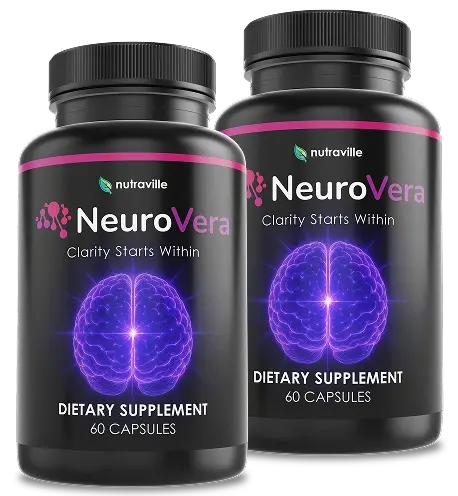 ⭐ Best Overall for Stress & Sleep
While KSM-66 and Sensoril are excellent single-ingredient extracts, NeuroVera combines adaptogens (including ashwagandha) with nootropics and sleep-supporting compounds in one formula.
- Contains ashwagandha + complementary adaptogens and nootropics
- Supports stress resilience, focus, memory AND sleep quality
- One formula replaces 3-4 separate supplements
- ClickBank Top Seller — proven customer satisfaction
Frequently Asked Questions
Yes. Clinical trials show daily use for 8–12 weeks is safe with no serious adverse events. If you experience digestive upset, reduce the dose or take with food.
KSM-66: noticeable stress reduction in 2–4 weeks, full benefits at 8 weeks. Sensoril: calming effects within hours to days, full sleep benefits at 2–4 weeks.
Yes — excellent combination. Magnesium glycinate calms the nervous system while ashwagandha modulates cortisol. Take magnesium glycinate (200–400mg) in the evening with Sensoril for maximum sleep support.
Yes — ashwagandha can increase T3 and T4 levels. Beneficial for subclinical hypothyroidism but potentially problematic for hyperthyroidism. Consult your doctor if you have a thyroid condition.